

Transistor Flasher Kit Two LED Oscillator MITCHELECTRONICS
Build a simple two LED flasher circuit with this beginner-friendly project kit. Ideal for soldering practice and classroom use. Assembles in under an hour.
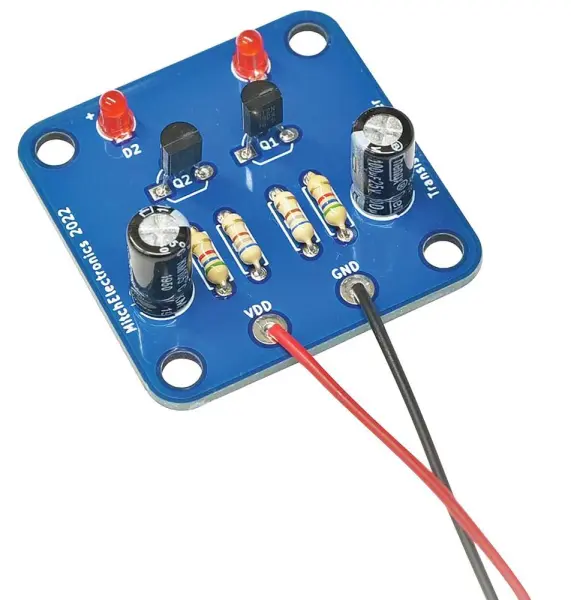
The Transistor Flasher Project Kit from MITCHELECTRONICS is a small electronics project for building a two-transistor oscillator that flashes two LEDs indefinitely while power is connected. The circuit creates a consistent pulse for activation, making it a very useful system that can be integrated into various applications.
Supplied in kit form, the project can be assembled in under an hour, making it ideal for beginners, classroom use, and soldering practice. Build a simple oscillating flasher circuit with two LEDs and learn the basics of electronics in a hands-on way.
The flasher is powered by a 9V PP3 battery (not included) and features a compact PCB measuring just 26x30mm, allowing for easy integration into your own projects.
Key Features
- Build a simple oscillating flasher circuit with two LEDs
- The circuit creates a consistent pulse that activates the LEDs
- Suitable for beginners, classroom teaching aid, and soldering practice
- Supplied in kit form, the project can be assembled in under an hour
- Powered by 9V PP3 battery (not included)
- PCB Dimensions: 26x30mm
Whether you're a hobbyist looking to learn or a teacher seeking a practical electronics project, this kit provides a rewarding and educational experience.
Need larger quantities? Need additional quantities? Get in touch and we'll arrange it for you.
- Dispatched within 0-2 business days
- Delivery to United States: 3-5 business days*
- Free Shipping Included
Always follow local regulations and product guidance.
Free standard delivery on Canadian mainland orders. Express delivery options and international shipping available at checkout.
We offer a 30-day money-back guarantee on most products. For faulty items, contact us within 14 days for a replacement or refund.
View Full Delivery & Returns PolicySecure Transactions
We take utmost care with your payment and personal details. Our website uses advanced encryption technology, including Secure Sockets Layer (SSL), to protect your information during transmission. You can verify a secure connection by looking for 'https' and a locked padlock in your browser.
Cookie Policy
Cookies enhance your shopping experience by keeping track of your cart and remembering you when you return. We also use banner advertising based on your browsing history to present products of potential interest.
Security Warning
Beware of phishing scams! We will never ask for personal details via email. If such information is required, we'll ask you to contact us by phone. If you receive an email requesting sensitive information, do not respond and let us know immediately.
You might like