

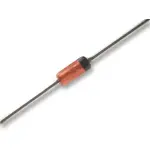
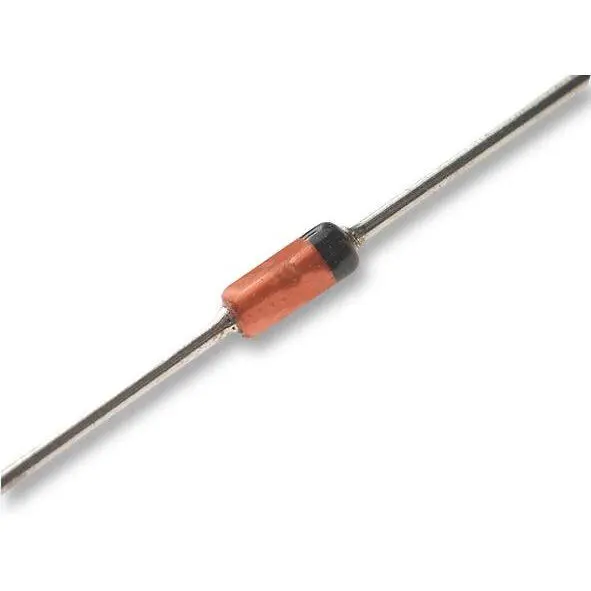
STMICROELECTRONICS DB4 DIAC Trigger Diode, 35-45V, 100µA, DO-35, 2-Pin
STMICROELECTRONICS DB4 DIAC for TRIAC triggering. 35-45V breakover, 100µA current. For motor control, lighting & industrial circuits.
The STMICROELECTRONICS DB4 is a two-pin DIAC (Bidirectional Trigger Diode) designed to provide reliable and precise voltage triggering in a variety of electronic circuits. It functions as a fixed-voltage reference trigger diode, making it an essential component for controlling TRIACs and simplifying gate drive circuits.
With a low break-over current and a specified breakover voltage range, this DIAC ensures stable and consistent switching performance. Its primary role is to initiate conduction in TRIACs, which is crucial for AC power control applications, leading to more efficient and compact circuit designs.
Key Applications & Features
- Motor Drive Control: Ideal for use in AC motor speed control circuits, providing the necessary triggering for TRIAC-based controllers.
- Industrial Electronics: Suited for industrial control systems, power supplies, and timing circuits where precise voltage triggering is required.
- Lighting Systems: Commonly used as a starting element in fluorescent lamp ballasts and in dimmer circuits for incandescent and LED lighting.
- Robust Construction: Housed in a compact, industry-standard DO-35 glass package, offering reliability and ease of integration into through-hole printed circuit board (PCB) designs.
- Wide Operating Range: Capable of operating at temperatures up to 125°C, making it suitable for demanding environments.
The DB4 DIAC is a fundamental component for designers and engineers looking to build efficient AC phase control, soft-start, or pulse generation circuits with a simple and cost-effective trigger solution.
Need larger quantities? Need additional quantities? Get in touch and we'll arrange it for you.
- Shipped within 0-2 business days
- Shipping to United States: 3-5 business days*
- Free Shipping Included
Always follow local regulations and product guidance.
Free standard delivery on US mainland orders. Express delivery options and international shipping available at checkout.
We offer a 30-day money-back guarantee on most products. For defective items, contact us within 14 days for a replacement or refund.
View Full Delivery & Returns PolicySecure Transactions
We take the utmost care with your payment and personal details. Our website uses advanced encryption technology, including Secure Sockets Layer (SSL), to protect your information during transmission. You can verify a secure connection by looking for 'https' and a locked padlock in your browser.
Cookie Policy
Cookies enhance your shopping experience by keeping track of your cart and remembering you when you return. We also use banner advertising based on your browsing history to present products of potential interest.
Security Warning
Beware of phishing scams! We will never ask for personal details via email. If such information is required, we'll ask you to contact us by phone. If you receive an email requesting sensitive information, do not respond and let us know immediately.
You might like