

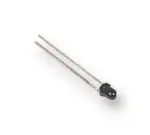
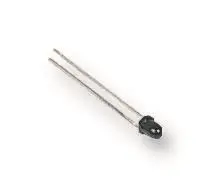
Vishay TEFT4300 NPN Phototransistor, T-1 (3mm), 925nm
High sensitivity NPN phototransistor in T-1 package with daylight filter. Ideal for optical switches, encoders & sensing.
The Vishay TEFT4300 is a leaded silicon NPN phototransistor housed in a black T-1 (3mm) package with a daylight blocking filter. It delivers high radiant sensitivity, making it an excellent choice for precise optical detection in a wide range of industrial and sensing applications.
Key Features
- Fast response times for reliable performance in dynamic environments.
- Daylight blocking filter matched with 940nm emitters, ensuring consistent operation in ambient light conditions.
- Angle of half sensitivity is ±30°, providing a broad detection range.
- Typical wavelength of 925nm for optimal compatibility with infrared systems.
- Power dissipation of 100mW, suitable for low-power circuits.
- Wide operating temperature range from -40°C to 100°C, enabling use in demanding environments.
Applications
This phototransistor is designed for use in optical switches, counters, sorters, interrupters, encoders, and position sensors. It is particularly well-suited for industrial sensing and instrumentation, where accurate light detection is critical. The TEFT4300 offers a practical solution for designers seeking a reliable, leaded phototransistor with integrated daylight filtering.
Specifications
- Wavelength (Typ): 925nm
- Viewing Angle: 30°
- Power Consumption: 100mW
- No. of Pins: 2
- Transistor Case Style: T-1 (3mm)
- Operating Temperature Range: -40°C to +100°C
With its compact 3mm package and robust electrical characteristics, the Vishay TEFT4300 is a versatile component for engineers and hobbyists alike, ensuring accurate and consistent performance in various optical sensing applications.
Need larger quantities? Need additional quantities? Get in touch and we'll arrange it for you.
- Shipped within 0-2 business days
- Shipping to United States: 3-5 business days*
- Free Shipping Included
Always follow local regulations and product guidance.
Free standard delivery on US mainland orders. Express delivery options and international shipping available at checkout.
We offer a 30-day money-back guarantee on most products. For defective items, contact us within 14 days for a replacement or refund.
View Full Delivery & Returns PolicySecure Transactions
We take the utmost care with your payment and personal details. Our website uses advanced encryption technology, including Secure Sockets Layer (SSL), to protect your information during transmission. You can verify a secure connection by looking for 'https' and a locked padlock in your browser.
Cookie Policy
Cookies enhance your shopping experience by keeping track of your cart and remembering you when you return. We also use banner advertising based on your browsing history to present products of potential interest.
Security Warning
Beware of phishing scams! We will never ask for personal details via email. If such information is required, we'll ask you to contact us by phone. If you receive an email requesting sensitive information, do not respond and let us know immediately.
You might like