

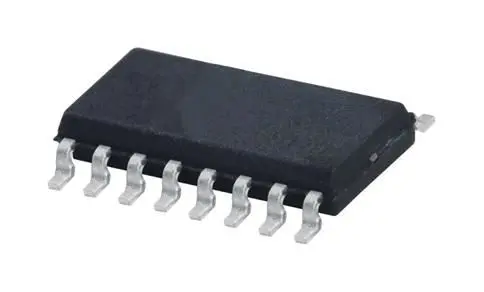
NXP PCF8574T 8-Bit I2C I/O Expander IC with Interrupt, SOIC
NXP PCF8574T I2C I/O expander IC. Adds 8 ports, drives LEDs directly, features interrupt & ultra-low 2.5µA standby current.
The NXP PCF8574T/3,518 is an 8-bit remote input/output expander designed for the I²C bus, featuring a dedicated interrupt line. It provides a straightforward method for adding general-purpose parallel I/O ports to any microcontroller system via the two-wire bidirectional I²C-bus interface, using just the serial clock (SCL) and serial data (SDA) lines.
This versatile device integrates eight quasi-bidirectional ports, which can be independently configured. Each port can act as an input to monitor interrupt status or read from devices like keypads, or as an output to directly activate indicator devices such as LEDs without requiring additional drivers. Its operation is supported across a broad voltage range from 2.5V to 6V.
Key Features
- I²C-bus to Parallel Port Expander: Adds eight additional I/O lines using the efficient I²C protocol.
- 100kHz I²C-bus Interface: Operates at standard-mode I²C-bus speeds for reliable communication.
- Direct LED Drive: The latched output ports provide sufficient current to drive LEDs directly.
- High Sink Capability: The total package offers a robust sink capability of 80mA.
- Interrupt Output: Features an active low, open-drain interrupt output to efficiently notify the controller of input changes, reducing the need for continuous polling.
- Ultra-Low Power: Excellent for power-sensitive and mobile applications, with a typical low standby current of just 2.5µA.
- Robust Design: Latch-up testing exceeds 100mA per JEDEC standard JESD78, and it operates reliably across an extended temperature range from -40°C to +85°C.
This component is ideal for expanding I/O in embedded systems, controlling displays, reading matrices, and managing sensor arrays, all while conserving valuable microcontroller pins and power.
After bigger quantities? Need extra quantities? Get in touch and we'll organise it for you.
- Dispatched within 0-2 business days
- Delivery to United States: 3-5 business days*
- Free Shipping Included
Always follow local regulations and product guidance.
Free standard delivery on Australian mainland orders. Express delivery options and international shipping available at checkout.
We offer a 30-day money-back guarantee on most products. For faulty items, contact us within 14 days for a replacement or refund.
View Full Delivery & Returns PolicySecure Transactions
We take the utmost care with your payment and personal details. Our website uses advanced encryption technology, including Secure Sockets Layer (SSL), to protect your information during transmission. You can check a secure connection by looking for 'https' and a locked padlock in your browser.
Cookie Policy
Cookies enhance your shopping experience by keeping track of your cart and remembering you when you return. We also use banner advertising based on your browsing history to present products of potential interest.
Security Warning
Beware of phishing scams! We will never ask for personal details via email. If such information is required, we'll ask you to contact us by phone. If you receive an email requesting sensitive information, do not respond and let us know immediately.
You might like