

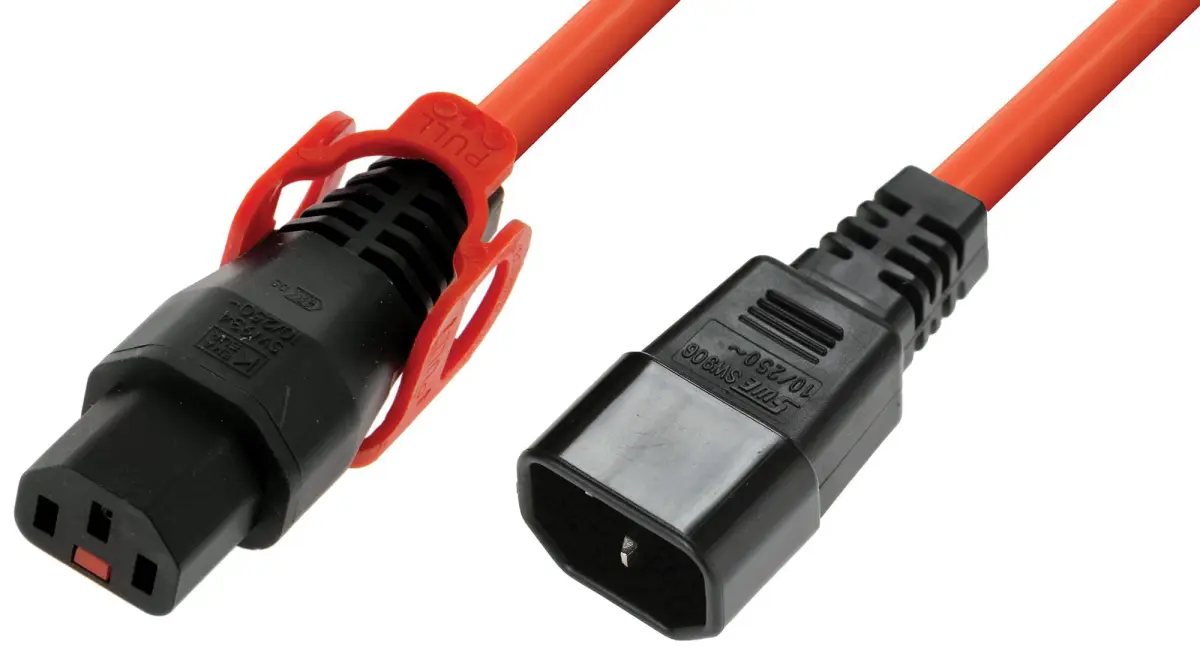
IEC LOCK - IEC Lock+ IEC C14 to Locking IEC C13 Mains Lead - Orange 4m
Secure IEC mains lead with locking C13 connector, 250V/10A, 4m. Prevents accidental disconnection.
The IEC LOCK - IEC Lock+ IEC C14 to Locking IEC C13 Mains Lead is designed to guard against accidental disconnection of computers, servers, and most electrical appliances. This mains lead is engineered to mitigate the risk of downtime caused by unintentional removal or vibration, ensuring a secure and reliable power connection for critical equipment.
Ideal for data communications applications that require a stable power source, this lead features a release locking mechanism that secures the connection until deliberate disconnection is required. The robust design prevents the disruption of critical power, offering peace of mind in environments where equipment uptime is essential.
Rated at 250V/10A, this lead delivers reliable performance for a wide range of electrical devices. The connectors comply with the IEC 60320 standard, featuring a C14 plug and a locking C13 connector for compatibility with standard power inputs.
Key Features
- Guards against accidental disconnection, reducing the risk of unexpected downtime
- Release locking mechanism for a secure and deliberate connection
- 250V/10A rating for reliable power delivery
- IEC 60320 C14 to IEC 60320 C13 connector configuration
- Suitable for various data communications and critical power applications
- Durable construction for long-lasting performance
Variant Details
- Size: 4m
Need larger quantities? Need additional quantities? Get in touch and we'll arrange it for you.

- Shipped within 0-2 business days
- Shipping to United States: 3-5 business days*
- Free Shipping Included
Always follow local regulations and product guidance.
Free standard delivery on US mainland orders. Express delivery options and international shipping available at checkout.
We offer a 30-day money-back guarantee on most products. For defective items, contact us within 14 days for a replacement or refund.
View Full Delivery & Returns PolicySecure Transactions
We take the utmost care with your payment and personal details. Our website uses advanced encryption technology, including Secure Sockets Layer (SSL), to protect your information during transmission. You can verify a secure connection by looking for 'https' and a locked padlock in your browser.
Cookie Policy
Cookies enhance your shopping experience by keeping track of your cart and remembering you when you return. We also use banner advertising based on your browsing history to present products of potential interest.
Security Warning
Beware of phishing scams! We will never ask for personal details via email. If such information is required, we'll ask you to contact us by phone. If you receive an email requesting sensitive information, do not respond and let us know immediately.
You might like