

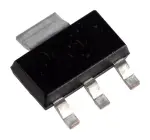
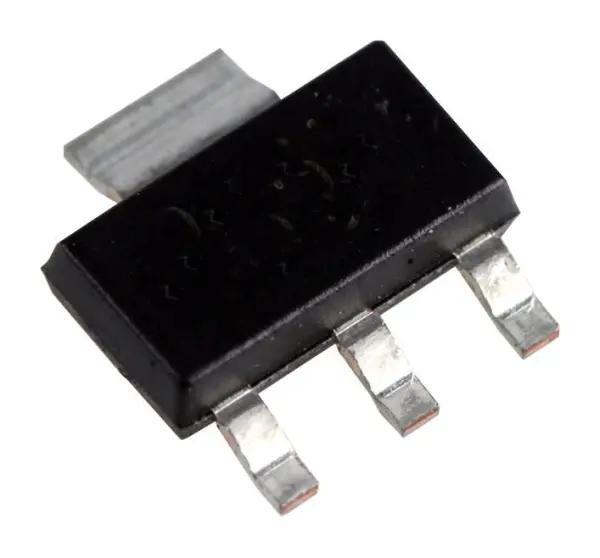
Voltage Regulator, LDO 3.3V, SMD, SOT-223
STM 3.3V LDO voltage regulator in SOT-223 package. 800mA output, low dropout, high PSRR. Ideal for stable power in electronics.
The STMICROELECTRONICS LD1117S33CTR is a high-performance, low-dropout (LDO) voltage regulator providing a fixed 3.3V output. Capable of delivering up to 800mA of continuous output current, it is engineered for stability and efficiency in compact surface-mount designs.
It features an NPN pass transistor architecture, which ensures high efficiency by directing the majority of the quiescent current into the load, rather than being wasted as ground current. This design, coupled with on-chip trimming, achieves a very tight output voltage tolerance of within ±1% at 25°C.
Key Features & Specifications
- High Output Current: Provides up to 800mA output current, with a typical peak of 950mA.
- Low Dropout Voltage: Features a typical dropout voltage of just 1V, making it suitable for applications where the input voltage is only slightly higher than the required output.
- Excellent Regulation: Offers superior line and load regulation (typically 0.1%), ensuring a stable 3.3V supply even with fluctuations in input voltage or load current.
- Thermal & Current Protection: Includes internal current limiting and thermal shutdown to protect the device and the circuit under fault conditions.
- Low Noise & High PSRR: Delivers a low output noise voltage (typically 100µV) and a high supply voltage rejection ratio (typically 75dB), ideal for noise-sensitive analogue and digital circuitry.
- Minimal External Components: Requires only a common 10μF capacitor at the output for stability, simplifying board design and saving space.
Housed in a space-saving SOT-223 surface-mount package, this regulator is optimised for thermal performance. Its robust design supports an operating temperature range from -40°C to +125°C, making it suitable for a wide array of commercial and industrial applications where a reliable, regulated 3.3V rail is essential.
Need larger quantities? Need additional quantities? Get in touch and we'll arrange it for you.
- Shipped within 0-2 business days
- Shipping to United States: 3-5 business days*
- Free Shipping Included
Always follow local regulations and product guidance.
Free standard delivery on US mainland orders. Express delivery options and international shipping available at checkout.
We offer a 30-day money-back guarantee on most products. For defective items, contact us within 14 days for a replacement or refund.
View Full Delivery & Returns PolicySecure Transactions
We take the utmost care with your payment and personal details. Our website uses advanced encryption technology, including Secure Sockets Layer (SSL), to protect your information during transmission. You can verify a secure connection by looking for 'https' and a locked padlock in your browser.
Cookie Policy
Cookies enhance your shopping experience by keeping track of your cart and remembering you when you return. We also use banner advertising based on your browsing history to present products of potential interest.
Security Warning
Beware of phishing scams! We will never ask for personal details via email. If such information is required, we'll ask you to contact us by phone. If you receive an email requesting sensitive information, do not respond and let us know immediately.
You might like