

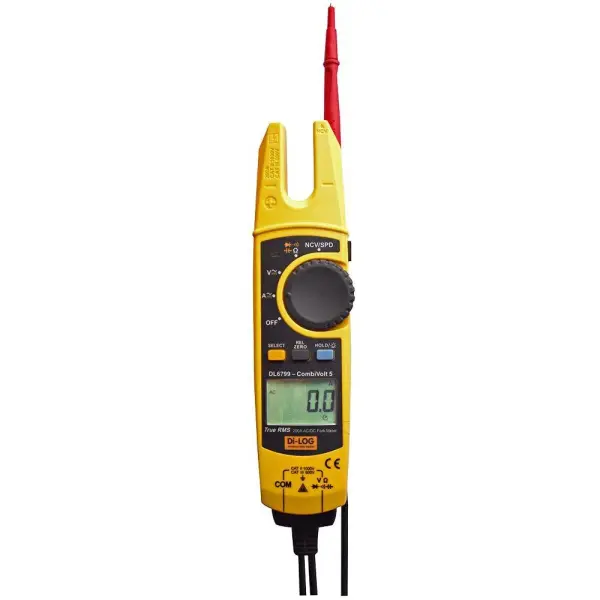
DI-LOG CombiVolt 5 TrueRMS Voltage, Continuity & Current Tester
DI-LOG CombiVolt 5 five-in-one TRMS tester. Measures AC/DC voltage & current, resistance, capacitance & continuity. BS EN 61010-1 compliant.
The DI-LOG CombiVolt 5 is a five-in-one tester designed for complete versatility, specifically catering to the demands of the electrical engineer. It features a rugged, ergonomically formed housing that ensures perfect handling and durability on the job site.
Offering a comprehensive range of testing functions, this device accurately measures TRMS AC/DC voltages up to 750V AC and 1000V DC, alongside TRMS AC/DC current up to 200A. It also includes non-contact single pole voltage detection for safe and efficient checks. Additional measurement capabilities comprise 60MΩ resistance with audible continuity and capacitance testing.
Safety is paramount, and the CombiVolt 5 meets the rigorous safety and performance requirements of BS EN 61010-1. It comes equipped with GS38 shrouded probe tips for secure connections and a bright LED flashlight to illuminate dimly lit workspaces.
Key Specifications
- DMM Functions: AC/DC Current, AC/DC Voltage, Capacitance, Continuity, Resistance
- DMM Response Type: True RMS
- Range Selection: Auto
- Voltage Measure DC Max: 1kV
- Voltage Measure AC Max: 750V
- Current Measure DC Max: 200A
- Current Measure AC Max: 200A
- Resistance Measure Max: 60MΩ
- Dimensions: 33 mm x 22 mm x 2 mm
- Weight: 538 grams
Need larger quantities? Need additional quantities? Get in touch and we'll arrange it for you.
Always follow local regulations and product guidance.
Free standard delivery on UK mainland orders. Express delivery options and international shipping available at checkout.
We offer a 30-day money-back guarantee on most products. For faulty items, contact us within 14 days for a replacement or refund.
View Full Delivery & Returns PolicySecure Transactions
We take the utmost care with your payment and personal details. Our website employs advanced encryption technology, including Secure Sockets Layer (SSL), to protect your information during transmission. You can verify a secure connection by looking for 'https' and a locked padlock in your browser.
Cookie Policy
Cookies enhance your shopping experience by keeping track of your basket and remembering you when you return. We also use banner advertising based on your browsing history to present products of potential interest.
Security Warning
Beware of phishing scams! We will never ask for personal details via email. If such information is required, we'll request you to contact us by phone. If you receive an email requesting sensitive information, do not respond and let us know immediately.
You may like